
Problem statement which project aimed to resolve and why?
In the nearby areas of Adani Power Maharashtra Ltd. (APML), Tirora agriculture is the major occupation. About 87% farmers, recorded paddy as a major crop grown during Kharif season. Average 30,389 Ha area is under Paddy Cultivation, which is 97% of total Tiroda block. About 75% farmers were practicing traditional agriculture practices, but were found to have a lack of awareness of effective agriculture practices and farm management therefore 80% farmers faced low production and yield and this barely contributed for their subsistence. In traditional farming, farmers were spending Rs.8000-10000 per acre of land and the average yield of paddy was 8.9 quintal/acre which is the lowest in Maharashtra, whereas Organic System Of Rice Intensification (SRI) farming gives 25 Qtl/acre of crops with minimum investment. Thus, SRI project was implemented here to increase the crop yield, and hence the income for farmers. Adani Foundation aims to empower farmers through sustainable organic farming for livelihood enhancement by facilitating promotion and implementation of SRI with comprehensive intervention modality for farmers.
How did the project resolve the problem?
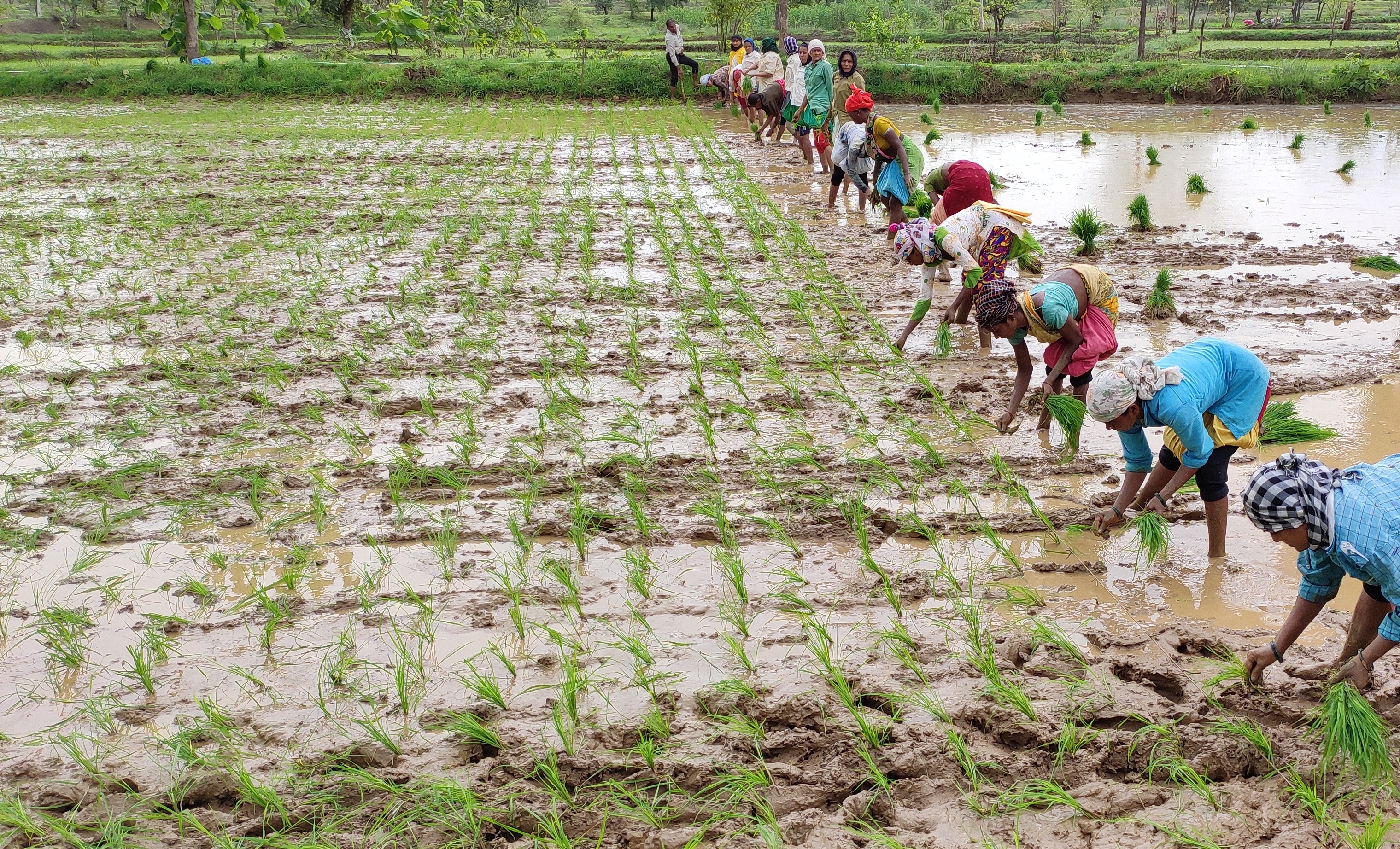
The System of Rice Intensification (SRI) is a methodology based on the technical principles of farming that is water management, careful younger single seedling transplantation, organic compost & pesticides and rotary weeding to reduce soil erosion. Organic SRI farming being implemented in villages through awareness, capacity building and imparting of technical training to farmers. Technical training imparted with support from the Agriculture Department, included prepration of raised nursery bed for paddy seedlings, transplantation, vermicompost, preparation of organic pesticides and growth enhancers named as Dashparni Ark, Agniastra, Brahmastra, Jeewamrut and Amritpani.
Additionally, Adani Foundation is also facilitating farmers to perform allied activities like preparation of organic fertilizers and pesticides, vermicomposting, biogas, cow-based livelihood, and water conservation.
Interventions and activities to encourage farmers to take up SRI and allied activities are as follows:-
• Awareness and Capacity Building of farmers, Distribution of literature on SRI, Co-ordination with Government Agriculture Department
• Developing volunteers at village level
• Technical Trainings & Demonstration of nursery/SRI plantation
• Formation of farmers groups
• Distribution of certified seeds to farmers.
• Providing of Marked Rope
• Biogas Installation
• Vermicompost bed distribution
• Formation of Farmers Producers’ Companies (FPC’s)
• Monitoring and Evaluation
What did project achieve as outcomes? What impact project has created on the ground?
SRI began in FY 2013-14 with 81 farmers over 81 acres of land in five villages. Every year the land covered under the Organic System of Rice Intensification (SRI) farming has been increasing with increased yield of paddy. Today, after seven years we have impacted the lives of farmers in 50 villages, & introduced 10,000 farmers to SRI farming covering 20,191 acres (8141 ha) of land, which is 27% of total area under paddy cultivation in Tiroda block (FY 2019-20).
Following are the Outcome and Impact of SRI-
• Increase in yield by 22% & reduction in input cost by 15%
• SRI practices reduced the presence of harmful insects such as Paddy White Stemborers (Scirpophaga Incertulas)
• Higher yields due to profuse tillering, increased panicle length and grain weight
• High level of awareness among farmers about the benefits of SRI
• Farmers adopted seedlings spacing management technique essential to the success of SRI
• Farmers started using organic pesticides
• Water conservation and irrigation practices have improved due to SRI
• Farmers are taking better care of the cattle
• Improvement in soil condition and fertility
• Increase in rare species of butterflies and sparrows
Who are the beneficiaries of the project?
Direct Beneficiary (groups) Number of Direct Beneficiary Indirect Beneficiary (groups) Number of Indirect Beneficiary SRI Paddy Cultivating Farmers 10,000 SRI Paddy Cultivating farmers and their families 40,000
Key indicators of project results?
Indicator Particulars Total SRI land - 8141 ha which is 27% of total agriculture land in Tiroda block Large Scale impact on land cover- In Tiroda block more acres of land covered under SRI paddy cultivation. Increased yield by 2.425 Qnt/Acre Farmers have better earning Increased income by Rs. 4876 Rs/Acre Average increase in income and savings 10000 farmers engaged in SRI farming Sustainable Growth Increase in spotting of rare species of butterflies and sparrows Environment Conservation Low water demand in SRI Water Conservation SRI practices reduced the presence of harmful insects such as Paddy White Stemborers (Scirpophaga incertulas) Reduction in severe crop diseases Farmers started using organic pesticides, vermicomposting and bio-enzymes Increased organic farming
Technology Leveraged by this Project
System of Rice Intensification is a scientific method of paddy cultivation, which is based on six major principles.
The Principles of SRI are as follows-
1. Water management- Management of intermittent wetting and drying upto the seed-bearing period, resulting in aeration of soil and deeper root growth. Maintaining water level upto 1-1.5 inches from grain formation stage till the harvesting period.
2. Young-aged seedlings- 2-leaf seedlings plant needs to be transplanted withing 12 days and this transplantation has capacity to grow more tillers
3. Careful single seedling transplantation- Taking care during the transplantation process to avoid root damage which could result in reduction of the tillers growth
4. Weeding- Rotary weeding for soil aeration, weed control & decomposed weed in soil acts as an organic manure
5. Organic compost & pesticides- Availability of ample sunlight and wider spacing while planting, reduces the chances of crop diseases & pests. Use of FYM, Vermicompost & organic pesticides helps in maintaining better quality of rice.
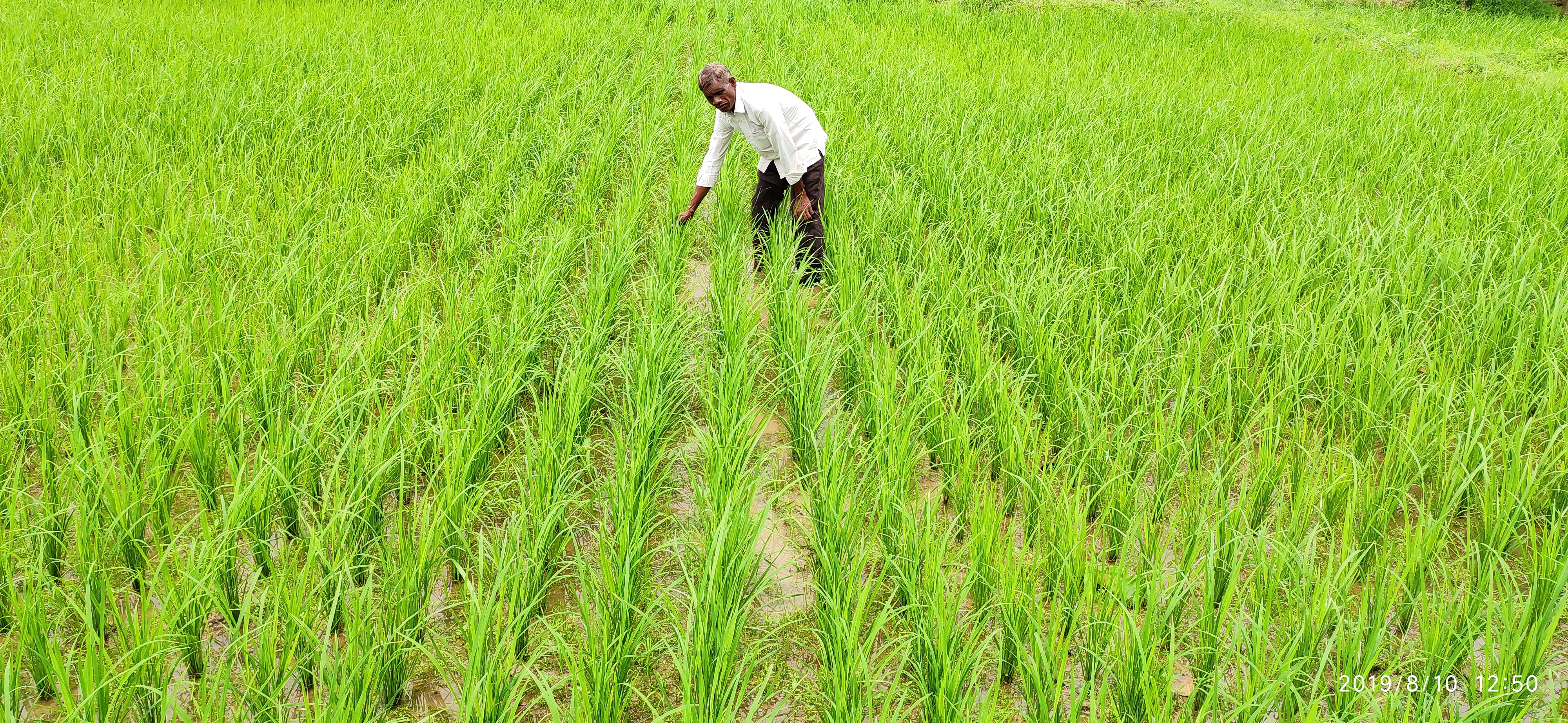
6. Wider spacing management- Ensuring 1 plant per hill, wider distances (25x25cm), so that wider machine can move easily, maintaining aeration, enabling sunlight to directly reach the roots, all these reduce the chances of crop diseases
Sustainability and Scalability of the project.
In Tiroda block through Organic SRI intervention we have improved the agro-climatic and agro-economic situation of farmers by upto 25% . In 2013-14 Adani Foundation began SRI farming with 81 farmers and within seven years in 2019-20 10000 farmers are using the method covering 20191 acres of land in 50 villages. The farmers have adopted the practice of organic SRI farming and water management. Adani Foundation is now working towards extending the SRI technique to all the farmers in the area, Construction of better Irrigation Facilities, improving the market linkages and support for Organic Pesticides and Fertilizers and promoting multi-cropping practices.
Information about project
To increase income source for farmers through organic SRI paddy cultivation Adani Foundation has started developing demonstration plots on 50 acres of land with 50 farmers by 100% following all the principles of organic SRI farming. The Foundation is providing complete support to all the 50 farmers hand-holding them from the beginning of the season until harvesting.
Previous Next