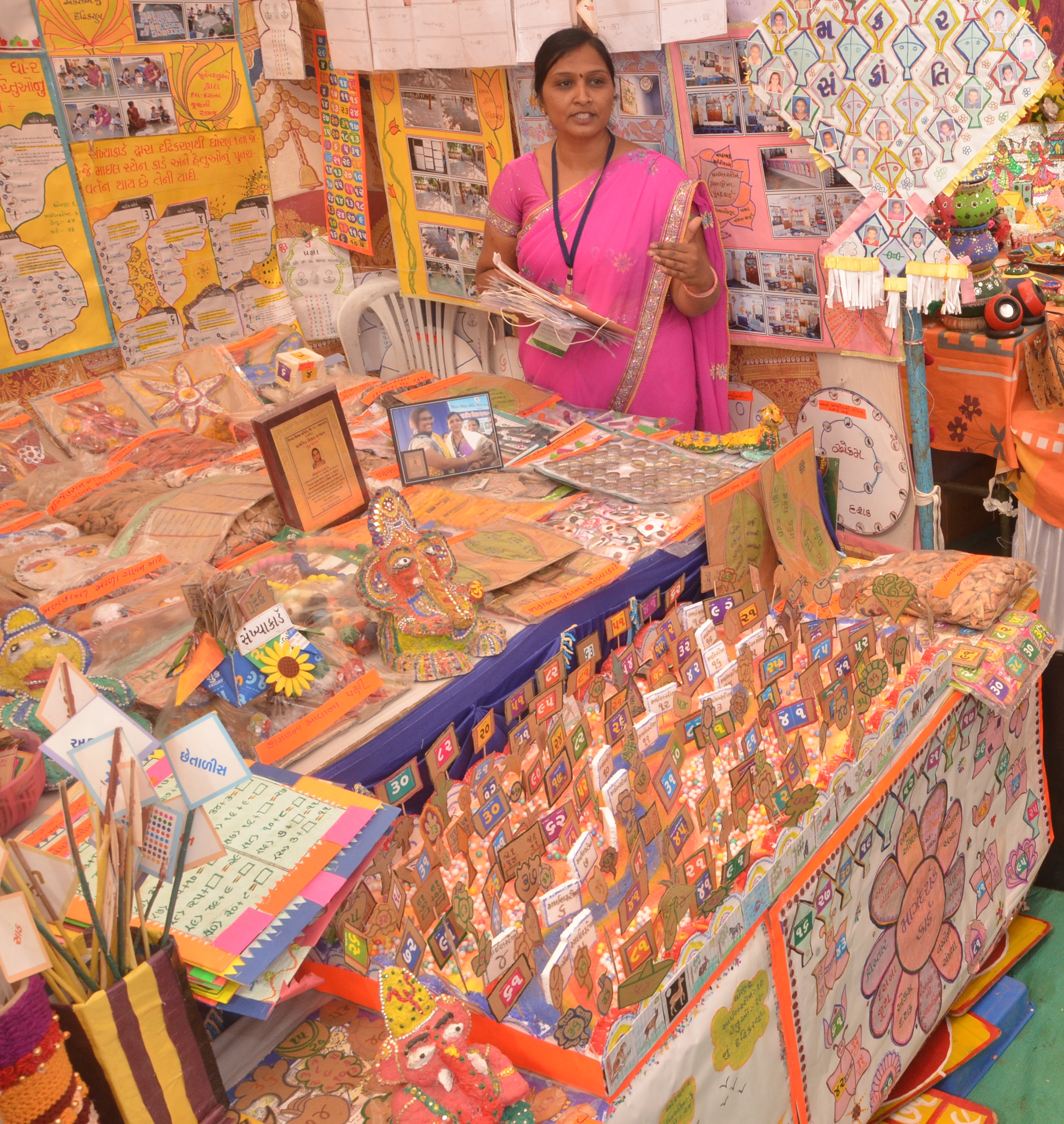
Problem statement which project aimed to resolve and why?
In the National Achievement Survey (NAS) 2017, Gujarat performed above national average in the early years of schooling (till grade 3). However, in the higher grades (grades 8 and above), the State’s performance dropped significantly below the national average, especially in mathematics, science, and social sciences. This posed a question to the State’s elementary education system. The factors seemed to be galore. However, when any educational machinery visualises to transform the education system, one of the most crucial agents for change are invariably the teachers!
Thus, the Teacher is said to be the key to the school system. Teacher is not only the change agent in bringing about ground-level transformation through her own initiative and creativity but is also the catalyst in ensuring effective implementation of centrally designed and administered quality education initiatives. Teacher is thus the foundation of any education system. Navtar is an effort to nurture creativity among teachers and educators, so as to bring about solutions to problems that may prevail in a classroom or a school. A GCERT-Nayara initiative, Navtar, a Centre for Innovations in Education celebrates and acknowledges teachers’ creativity.
The GCERT-Nayara Energy’s collaborative programme, Navtar, addresses the concern of facilitating creative pathways for finding local solutions to challenges faced in education leading to enhanced quality of learning in government elementary schools across the State of Gujarat. The program is bringing about a culture of creativity among teachers and educators, specifically by incubating, scaling-up and mainstreaming selected ideas and works of innovation.
Annually, Nayara Energy’s Navtar program directly reaches out to over 3000 government schoolteachers across the State of Gujarat, 500 teacher pupils and over 100 state education experts. It also indirectly reaches to over 20,000 government elementary school teachers. Moreover, through these participating teachers, the program also reaches out to over 100,000 elementary school students in Gujarat. Each year, over 1500 innovative practices by the teachers are facilitated and recognized under the program.
The Programme supports the Government schools and school teachers in bringing about a culture of creativity among teachers and other educators; specifically by incubating, scaling-up and mainstreaming selected ideas and work of innovation.
How did the project resolve the problem.
Navtar: GCERT-Nayara Energy’s Centre for Innovations in Education aims to create an enabling environment for encouraging and supporting a culture of creativity among the community of formal education practitioners in the State of Gujarat. Navtar program aims to identify and develop scalable, feasible and replicable educational innovations in primary education and the same are disseminated across the state. The key interventions and activities of Nayara Energy’s Navtar program are follows-
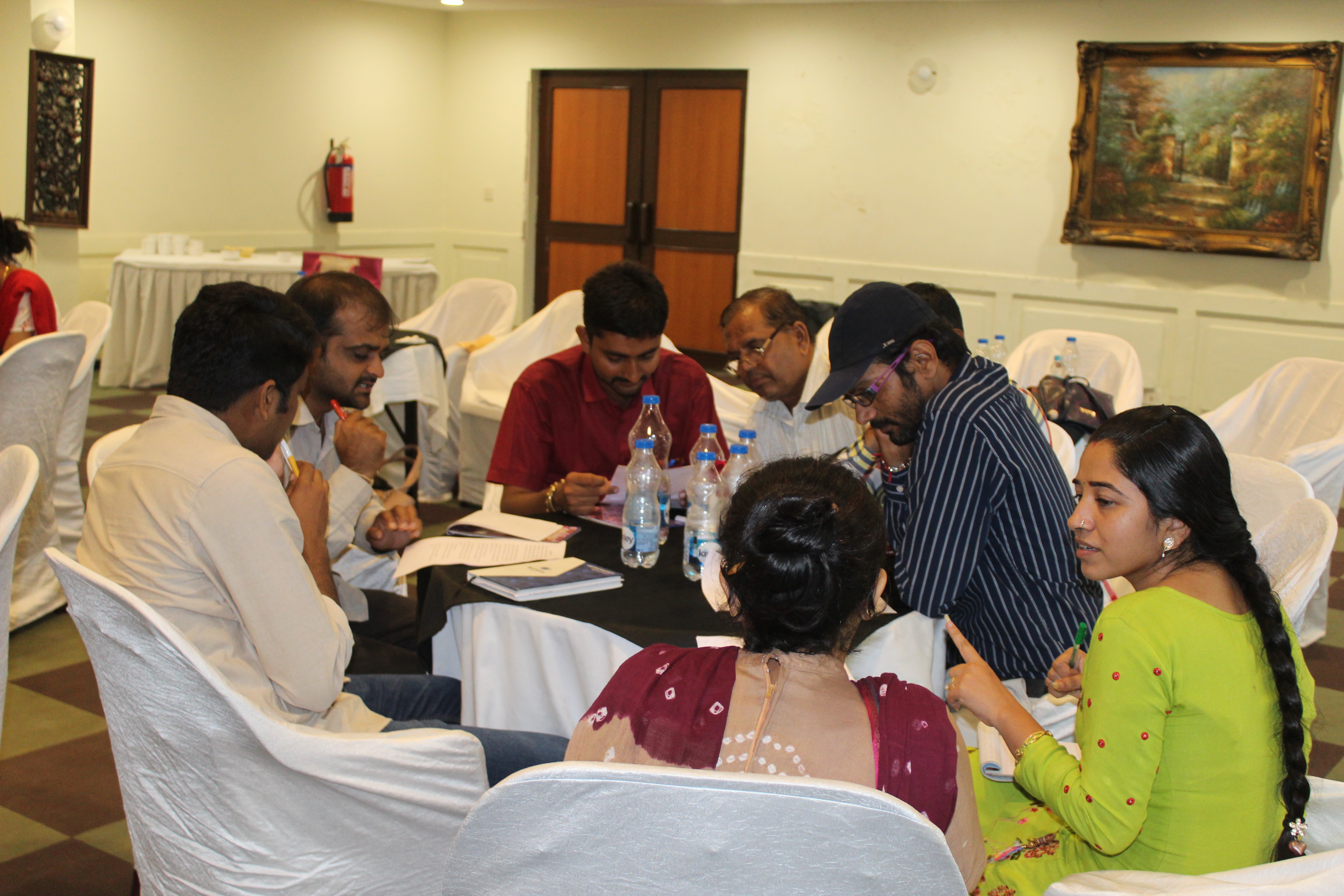
• Identification of innovations - In order to identify and understand innovations from grassroots, the program conducts various workshops, person-to-person interviews and group discussions with the participating teachers along with the various District Institutes of Education and Training (DIETs) and District Innovation Cell (DICs).
• Classification of innovations - The program classifies identified innovations to gather practical lessons from implementation of effective innovations. These innovative practices are classified under various thematic areas such as community engagement, girls’ education, inclusive education, science & environment, classroom teaching, leveraging technology, assessment, health and nutrition, among other areas
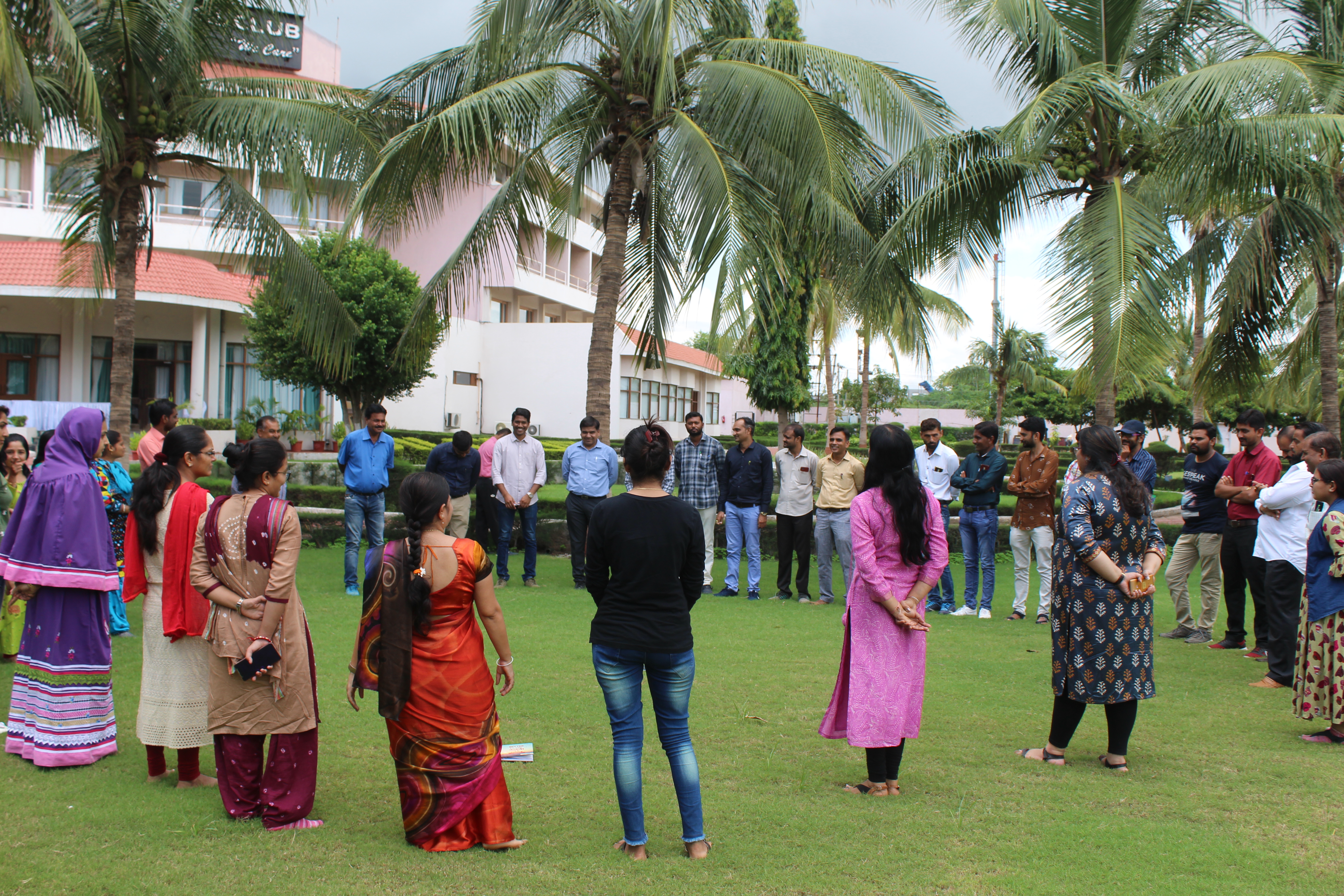
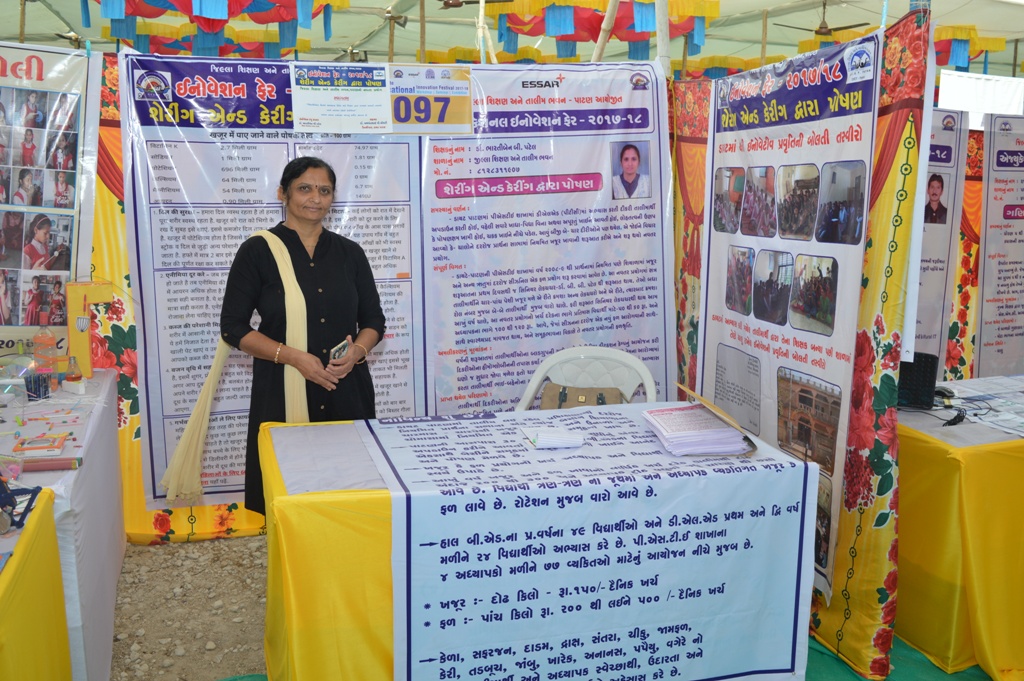
• Connect – The program has created a state-level network of DICs to facilitate structured interactive spaces like district/state-level innovation festivals and workshops to create cross-learning opportunities for high potential grass-root level teachers and educators. A digital platform (web portal) has been designed and developed to provide customized virtual collaboration spaces for various stakeholders.
• Documentation – As part of the program, content material and easy-to-access information on innovations, best practices, and case studies are developed. The innovations identified, using a rigorous process, from block-district-state level are documented.
• Scale up & mainstreaming - The program provides incubation support to identified innovations, in order to scale up and mainstream them into the state-level education system.
Outcomes achieved and impact that project has created on the ground.
Over the years, Nayara Energy’s Navtar program has provided long-term solutions by strengthening government system and processes, and making them amenable and supportive of teacher creativity. Some of the program achievements are:
• A new, digital platform in the form of a web portal has been developed in 2018, and over 3000 teachers are already registered on this platform. Over 2000 innovations have been uploaded and disseminated on the portal till date.
• Standard frameworks, SOPs were developed and uploaded on the digital platform to strengthen processes at state-level (collection, documentation and cataloguing of innovative practices)
• Over the years, more than 4500 innovative practices have been received from across the state and of these, over 450 innovations have been promoted to state-level.
• Five annual state-level innovation festivals have been organised that have reached out to more than 20,000 teachers directly across the state.
• Over 300 state-level innovations have been published by GCERT in the form of innovation booklets and were disseminated across the state.
• Over 5000 teachers have been trained under the programme through various workshops like writing, innovation festivals and learning seminars.
• Navtar chair at GCERT was established during the 5th State Education Innovation festival that will support GCERT to conduct various knowledge dissemination workshops across the state.
• During the COVID-19 pandemic, one of the innovations has been incubated and scaled across the state. GCERT implemented the innovation in partnership with UNICEF, which reaches out to over 50 lakh students across the state every month.
Beneficiaries of the project.
Direct Beneficiary (groups) Number of Direct Beneficiary Indirect Beneficiary (groups) Number of Indirect Beneficiary Govt. school teachers 3.000+ Government School Teachers 20,000 District and State Education workers / experts 100 Government elementary school students 1,00,000 Teacher Pupils 500
Key indicators of project results?
Indicator Particulars Selected teachers (0.5%) trained throughout the year in different aspects of creativity in education Over 5,000 teachers trained under the programme till date. Innovative ideas documented and made available digitally in the public domain The database of innovations and digital platform Local-level problems/challenges faced by schools About 3,000 teachers/principals are encouraged and capacity built in problem identification Locally created developed and designed innovative solutions to the above problems About 1,500 local level innovative solutions to quality learning have been brainstormed, created, and piloted Nurturing creativity among teachers and principals A cadre of over 30 Key Resources, trained in creativity in education is formed at the State-level Setting up system and mechanisms to acknowledge and disseminate good work done by teachers within their schools/classrooms/communities Set of SOPs developed.
A databank of over 13,000 innovative practices has been created.
A web-portal dedicated to Navtar is developed.
34 Districts as well as State level Innovation Festivals held during the year.
1500 innovative ideas documented and shared through various mechanisms.
A set of books of stories of innovative work by teachers published.
Navtar posters have been deployed by Nayara Energy to encourage teacher participations
Use of technology and how it helped the project activities.
In order to streamline the process of identification, classification, documentation & dissemination, a customized digital platform in the form of web portal have been designed and developed. The web portal is designed to provide a hassle-free and seamless user experience to all the stakeholders including teachers, school heads, schools and NGO’s. Digital platform improved the efficiency and effectiveness of DIETs/DICs who are responsible for the identification of innovations, cataloguing and documentation. In addition, establishment of web portal has helped in driving collaboration amongst various stakeholders for discussing new ideas and challenges at the district and state-levels. Inward and outward linkages within the school education system (district, block and cluster level systems) have become easy with the help of the web portal. The platform is also a learning ground for other agencies such as private schools, management and creative institutes, pre-service institutes, universities, academia, researchers, etc.
In order to facilitate the District events under Navtar program (34 such events are held every year), a mobile-based App has been developed and is being piloted.
Leveraging government scheme(s).
Navtar- Centre for Innovations in Education is an initiative by Nayara Energy in partnership with Gujarat Council of Educational Research and Training (GCERT), an institution which is a pivotal at the Gujarat state-level for the enhancement of qualitative education at primary and secondary schools. It works as a prominent institution for implementing the educational policies, programmes and research in the State.
Through GCERT, Navtar program also works through 34 District Institutes of Education and Training, Government of Gujarat.
Sustainability and Scalability of the project.
The Program being an initiative of the Government of Gujarat, with support from Nayara Energy, has very high chances of being sustained and continued.
Further, Nayara Energy’s Navtar program aims to bring incremental changes within the education system bringing qualitative learning for both teachers as well as students. The program signifies inculcating a creative thought process and creating a culture where every teacher feels professionally committed and motivated to be a change agent.
• Partnerships are a key to drive impact through the program, such as working with various internal departments of GCERT, education department and making it sustainable and scalable.
• Mechanisms for increasing interaction within the teacher community and establishing them as a community of practitioners through establishing interaction platforms such as innovation festivals/workshops/seminars at state as well as district level are introduced.
• Standard operating procedures have been developed to strengthen various state and district-level initiatives for the program.
• The process from ‘ideation to incubation to mainstreaming’ will be key to create a state level impact. To ensure its effectiveness, Navtar innovation cell is to be developed within the state Government.
Any other information of the project.
Nayara Energy’s efforts will be to institutionalize Navtar Centre as one of the many departments/initiatives of the GCERT. Over the years, Nayara Energy has been a key partner in phase 1 which focused on-
• Strengthening/setting-up new systems for ensuring smooth functioning of the program.
• Capacity building of relevant responsible professionals (district, as well as state) in Creativity and Innovation in Education.
• Documentation, cataloguing and sharing innovative/creative work done by teachers within the government set-up.
• Over 13000 innovative practices piloted by teachers in government schools have been recorded in the database.
In the second phase, the program will focus on supporting the government of Gujarat in bringing about a culture of creativity among teachers and other educators; specifically, by incubating, scaling-up and mainstreaming the selected ideas and work of innovation by focusing on:
• Replicability potential- For this phase, the emphasis is on identifying potential replicable creative work done by teachers.
• Scaling-up and Mainstreaming- Scale-up/mainstream the selected innovations at least 5 ideas.
• Post COVID 19 Education Model Cluster- Demonstrate ‘Innovative approach towards learning in government schools in the post COVID 19 scenarios’. A prototype / model cluster will be devised across few villages in a district (preferably in Devbhumi Dwarka).
• National Seminars- Sharing experiences from Gujarat along with those of other states.
• International Webinars- Showcase the efforts by teachers in the state of Gujarat, and the various initiatives by GCERT & Nayara Energy across international forums and webinars.
• Online teacher training in creativity- Propose to organise a three-month duration, distance learning programme for teachers and innovators in the education sector.
• E-media post COVID 19- Effective use of the Navtar web portal, especially in the post COVID-19 scenario.
Previous Next