
Problem statement which project aimed to resolve and why?
The rapid spread of the coronavirus and the WHO announcement on 11th March of a global COVID-19 pandemic has caught most of the world off guard and has severely impacted everyone’s lives globally. The full effect of the catastrophe has yet to play out, but it was clear from the early stages that the crisis would have a serious impact on India’s public health system as well as the disruption to the country’s economy and particularly on the livelihood of millions in India’s. It was clear that science and medical professionals were in the front lines in the fight against the coronavirus. Governments worldwide started implementing measures to mitigate the spread of the virus by doing awareness campaigns, urging people to follow social distancing guidelines and hand hygiene as the first steps. Followed by the lockdowns and making it compulsory to wear face covers in public. As the Government of India started to take subsequent safety measures to minimize the incidence of infection. The Siemens Group of Companies in India very quickly decided to step up and help India to fight against COVID-19 on different fronts by committing INR 20 crore.
How did the project interventions resolved the problem?
Siemens has opted for a broad and diversified approach – with emphasis on leveraging competencies of the Siemens Group of Companies to support India in its fight against COVID-19. Keeping true to its values and striving to support the most vulnerable members of society in these moments of need.
The COVID-19 relief plan set up by a taskforce including medical professional to assess the different thematic areas that Siemens wanted to focus on.
1. Support the healthcare infrastructure and frontline workers
2. Support to migrant and daily wage workers
3. Support with access to education
4. Support the economy and keep essential services running
5. Financial support to PM Cares Fund via employee donation including company matching
Results of activities and impact created
Siemens India CSR COVID-19 strategy was to develop a quick response aimed to rapidly support the critical infrastructure to support the public health system and subsequently support the most vulnerable members of the society.
1. Support the healthcare infrastructure and frontline workers with critical equipment and PPE:
• 2 PCR Analyzers donated to key Government Hospitals
• Setup a COVID-19 Testing Lab at National Cancer Institute, Jhajjar, Haryana, which was converted into an 800-bed Covid-19 hospital
• Provided 40,000 PCR testing kits to Indian Council of Medical Research
• Provided 25,000 Antibody tests to AIIMS Jhajjar and SVP Ahmedabad
• Provided 50 ventilators to several government hospitals across India
• Repaired of a CT and an MRI at Seven Hills COVID-19 Hospital
• Provided 500,000 surgical masks & 100,000 gloves to Government of Maharashtra, Tamil Nadu and Delhi for frontline health workers
All these interventions, especially the equipment provided have been critical to support the healthcare system in India that is struggling with the high influx of COVID-19 patients and support to frontline workers by keeping them safe and allowing them to do their jobs in a safe way.
Outcome:
All equipment provided will help to strengthen the public healthcare infrastructure to fight COVID-19 and in the long run for the treatment of critical patients as all are essential.
2. Support to migrant and daily wage workers:
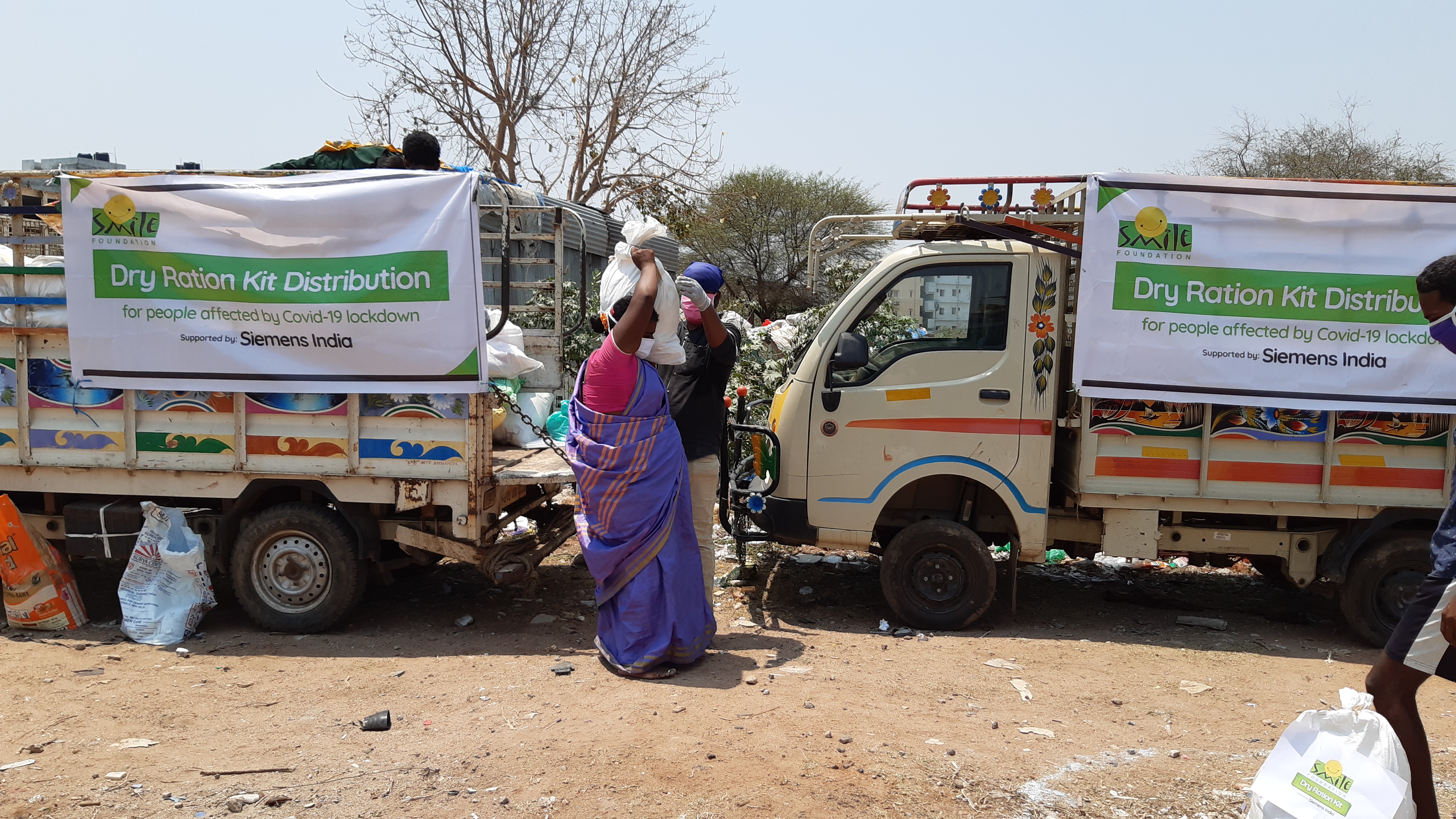
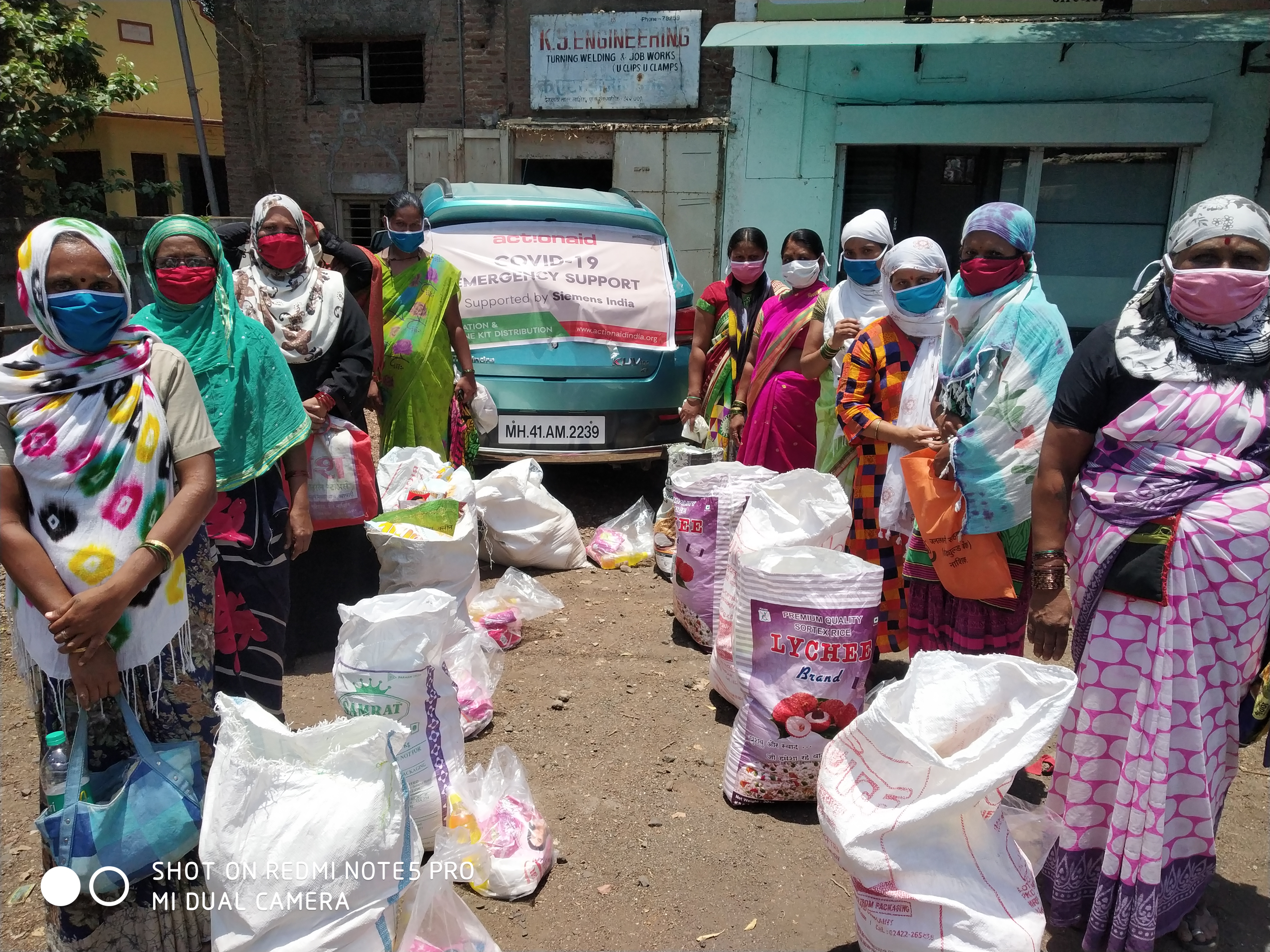
• 44,000 migrant workers, agricultural workers, construction workers, domestic workers, street vendors, coastal fishing communities as well as Persons with Disabilities were supported with rice and dry rations kits across India
• 32,000 migrant workers families have been supported with additional hygiene kits consisting of: face masks, handwash, bathing soap, washing powder and sanitary napkins
• 12 locations
The lockdown has made it increasingly difficult for a large part of society to get access to daily essentials as prices have gone up and supply shortages. The socio-economic profile of the areas where distribution have been done, are people exposed to poverty and unhygienic living conditions. The beneficiaries are mostly residing in the densely populated urban slums. These are the population at risk in India, who are among the hardest hit by the crisis due to the lockdown.
Outcome:
Meeting the daily food needs of the most vulnerable families especially those with children. Contributing to self-isolation of the people to keep the virus from spreading avoiding that migrate to other places. Contributing towards the efforts of the government to meet Hunger.
3. Support with access to education:
• Digitalization of 33 Government Anganwadis in the State of Goa
• Introducing new early childhood education at anganwadis being operated under the Integrated Child Development Services (ICDS) scheme by using latest education technology products such as an interactive whiteboard and tablets to teach children, through interactive books, educational videos, engaging games, fun worksheets and educational cartoons.
Outcome:
Create ‘Model Anganwadi’ that provide access to quality early childhood care and education, complemented by skills development. The Model Anganwadi’s act as resource center to cater to the educational needs of people in the surrounding areas especially the migrant workers children in a post COVID-19 situation.
4. Keep economy and essential services running:
• Siemens Project and Service engineers across all Group Companies are working round the clock to ensure that essential equipment in hospitals, diagnostic laboratories, power plants, transmission & distribution systems, critical metro & rail equipment systems, and manufacturing facilities of essential goods are kept functioning and operational.
• Siemens has committed to support its extended supply chain and the temporary workforce at this time of need. All payments are being released on time to them.
5. Financial support to PM Cares Fund via employee donation including company matching:
• The total contribution to PM CARES fund of INR 23 million
• Employees contribution: INR 11.5 million
• Companies contribution INR 11.5 million
Who are the beneficiaries of the project?
Direct Beneficiary (groups) Number of Direct Beneficiary Indirect Beneficiary (groups) Number of Indirect Beneficiary ICMR – COVID-19 test labs 40,000 PCR test kits
25,000 Antibody kitsCOVID-19 suspected patients 65,000 Government Hospitals 2 PCR Analyzer
Testing Lab
50 ventilators
Repair of a CT and an MRI
Patients All COVID-19 suspected patients visiting these hospitals COVID-19 patients under ICU or critical care Frontline health workers that benefited from PPEs 3 States Patients 500,000 Family members of the migrant workers 44,635 Anganwadis 33 Vulnerable children 660
Use of technology and impact achieved through it
Siemens leveraged the Siemens Healthineers technology and knowledge to identity the most appropriate responses.
The Siemens Healthineers Total Antibody Test has demonstrated 100% sensitivity and 99,8% specificity in identifying SARS-CoV-2 antibodies in as few as 10 minutes.
The SARS-CoV-2 total antibody test is CE marked and the company is pursuing FDA Emergency Use Authorization (EUA).
The PCR molecular SARS-CoV-2 detection test kit, which demonstrates 100% positive percent agreement and 100% negative percent agreement.
Siemens Healthineers has the broadest portfolio of high-quality tests for SARS-CoV-2 to help address the global pandemic. The Siemens Healthineers tests arm healthcare professionals with the information they need to accurately detect SARS-CoV-2, assess disease severity and therapeutic response, and aid care management for patients with comorbidities or complications such as escalated immune response or sudden development of coagulation disorders. These tests will assist clinicians with more timely interventions that can result in better patient outcomes. • High-end ventilators donated for critical care:
• Dräger Savina 300 ventilator with the power of a turbine-driven ventilation system with a wide range of ventilation modes. The large colour touch screen and intuitive operating system make configuration and operation very simple.
• MAQUET Servo-S and Servo-I Ventilator ensuring safe, reliable and high-quality ventilation to deliver top performance for both adult and paediatric patients in a variety of ventilatory care settings, including a wide range of tools to help stabilize patients and wean them off the ventilator.
• Lab technology with focus on automation to improve the throughput:
• QIAcube System – QIAGEN: Robotic workstation for automated purification of DNA and RNA for up to 12 samples can be processed per run.
• Biosafety cabinet class 2A Bio II Advance - Enclosed, ventilated laboratory workspace for safely working with materials contaminated with pathogens requiring a defined biosafety level. Class II cabinets provide both kinds of protection (of the samples and of the environment) since makeup air is also HEPA-filtered.
• Cold microcentrifuges provide outstanding processing power with a broad array of microcentrifuge rotors and accessories for microcentrifuge tube processing. Refrigeration offers cooling from room temperature to set temperature in just 9 minutes.
• Six-channel real-time PCR instrument with a throughput of 96 reactions including COVID-19 test samples.
Sustainability and Scalability of the project.
All interventions focusing on immediate needs of the healthcare system and the support of the most vulnerable population. The detrimental effect of the outbreak of COVID-19 is evident not only on the global healthcare systems but also on other aspects of human life and will likely continue into 2021.
The scale of responses to COVID-19 and its consequences, both for the healthcare system and economy, mean a proactive action was critical to alleviate future pressures. The different activities done under the Covid-19 response have the aim to strengthen the India’s healthcare system with critical equipment with focus on ventilators and a lab equipment that includes automation technology to improve the throughput and efficiency in a sustainable way that will be accessible and available to the most vulnerable population for the long term.
Support to Integrated Child Development Scheme:
• The project is using latest education technology products such as an interactive whiteboard and tablets to teach children, through interactive books, educational videos, engaging games, fun worksheets and educational cartoons.
• It is a 2 years project that will be running beyond the covid-19 pandemic. The Model Anganwadi’s act as resource center to cater to the educational needs of people in the surrounding and can easily be replicated in other locations.
Previous Next