Problem statement which project aimed to resolve and why?
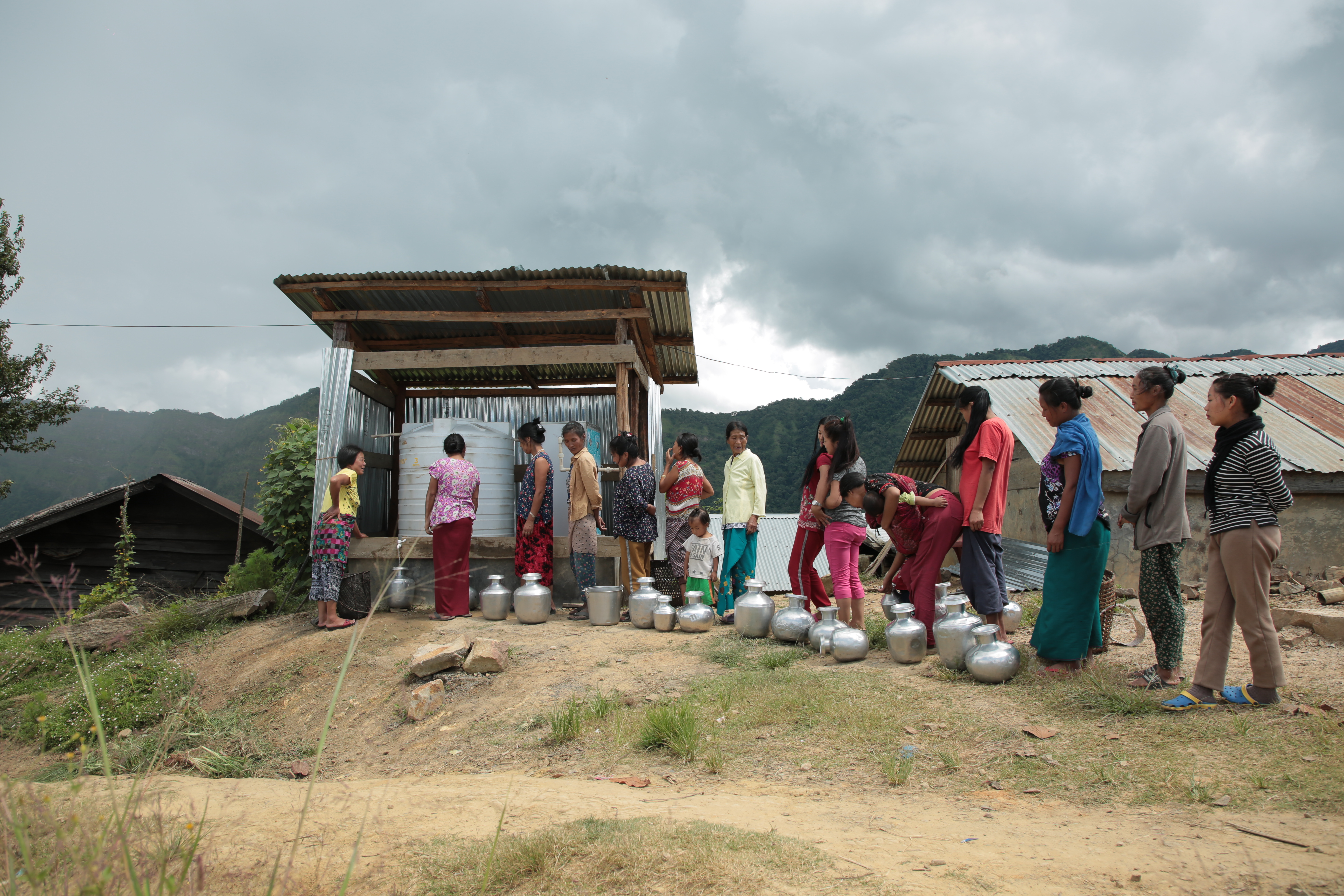
As declared by the Indian Ministry of Drinking Water and Sanitation 2017, around 41 million Indians living in underserved areas lack access to clean & safe drinking water. Consumption of contaminated water can transmit lethal disease like diarrhoea, cholera, dysentery, typhoid etc. As a result, low-income families have to bear a major economic burden of their annual wages for treating water-borne diseases every year. Lack of clean water is also detrimental for gender as women and girls have to walk an average 6 kms distance every day to fetch clean water. The time costs associated with inadequate water systems are not just those related to collecting water. These people suffer huge costs because of illnesses caused by unsafe and insufficient drinking water. It's been observed that most of the rural areas still use rudimentary methods to purify water like sieving through cloth. These methods have their own limitations and do not remove invisible impurities like water borne pathogens. There are also another sections of the communities that have been saddled with water purification systems like RO (Reverse osmosis) irrespective of any significant assessment of input water quality and whether such a costly proposition (both in terms of initial cost and cost of operations) is required or not. While RO systems do offer clean drinking water but they also waste a huge amount of water (almost 70% of the input water gets wasted), striping water of essential minerals and micronutrients and are a kind of overkill where the problem is primarily only about microbiological contamination.
How did the project resolve the problem?
In order to address the clean and safe drinking water problems being faced by the communities across India, Tata Chemicals Ltd. through Tata Chemicals Society of Rural Development (TCSRD), in association with Ncourage Social Enterprise Foundation (Ncourage) which is a wholly owned subsidiary of Tata Chemicals Ltd. embarked upon an initiative named Swach Tarang in Feb 2019. The initiative aims to reach out to these underprivileged communities / households by providing them the access to safe and clean drinking water and thereby helping them in reducing instances of the deadly water-borne diseases. Ncourage, through this initiative is installing community purifier units called Tata Swach Tech Jal purifier which is based on innovative and sustainable water purification technology, thereby addressing the major social problems related to health, livelihood, gender equity and improving the quality of life of communities living at the bottom of the pyramid
The Key interventions include:
a) Mobilization of communities through collaboration with partners: The organisation started working with grassroots partners (NGOs, SHGs, FPO etc.) to mobilise the community, understand the need and reality at the ground level. In order to identify the correct intervention based on community structure, clusters and groups awareness sessions were conducted for the community. Assessment was done to understand the demand, capacity / volume requirements by the clusters and readiness of community to look after water purification system. Based on this appropriate community space and the beneficiary groups were then identified.
b) Operations and maintenance: To establish systems and provide water purification facilities to these underserved communities, a tripartite arrangement was advocated which included contributions from partners/ NGOs and the communities along with our support.The contributions received were garnered and put together for installing purifiers for the targeted communities directly or through associated NGO/SHG partners. TCSRD and Ncourage Foundation also collaborated with other corporates helping them with water purification solutions for the communities where they wish to create a difference
Engagement Model:
Additionally, Swach Tarang program also engaged with corporates, governments organizations and NGOs and Community based organizations to pilot and create different sustainable, innovative and flexible solutions specific to the community and is working on primarily two models:
• Project financing – As part of its community development initiatives, the corporate/ government is directly funding Swach Tarang for setting up the water purifiers in one or many local communities where they wish to create a difference.
• Self-Sustainable model – The community water purifier units are provided with a flexible repayment model to the NGOs/ SHGs / local community, thus giving the beneficiaries access to free drinking water or customized to the pay per use. As part of the self-sustaining model the water ATM was also introduced. The Water ATM, works just like a prepaid top up card for mobile phones. These ATMs can be installed at public places for easy access to safe drinking water for everyone. People can scan on the ATM’s sensor and press the button (1 litre, 5 litres and 10 litres), depending on their water requirement. This ATM facility could be further customized to include normal & cold water dispensing options.
What did you achieve as outcomes? What impact project has created on the ground?
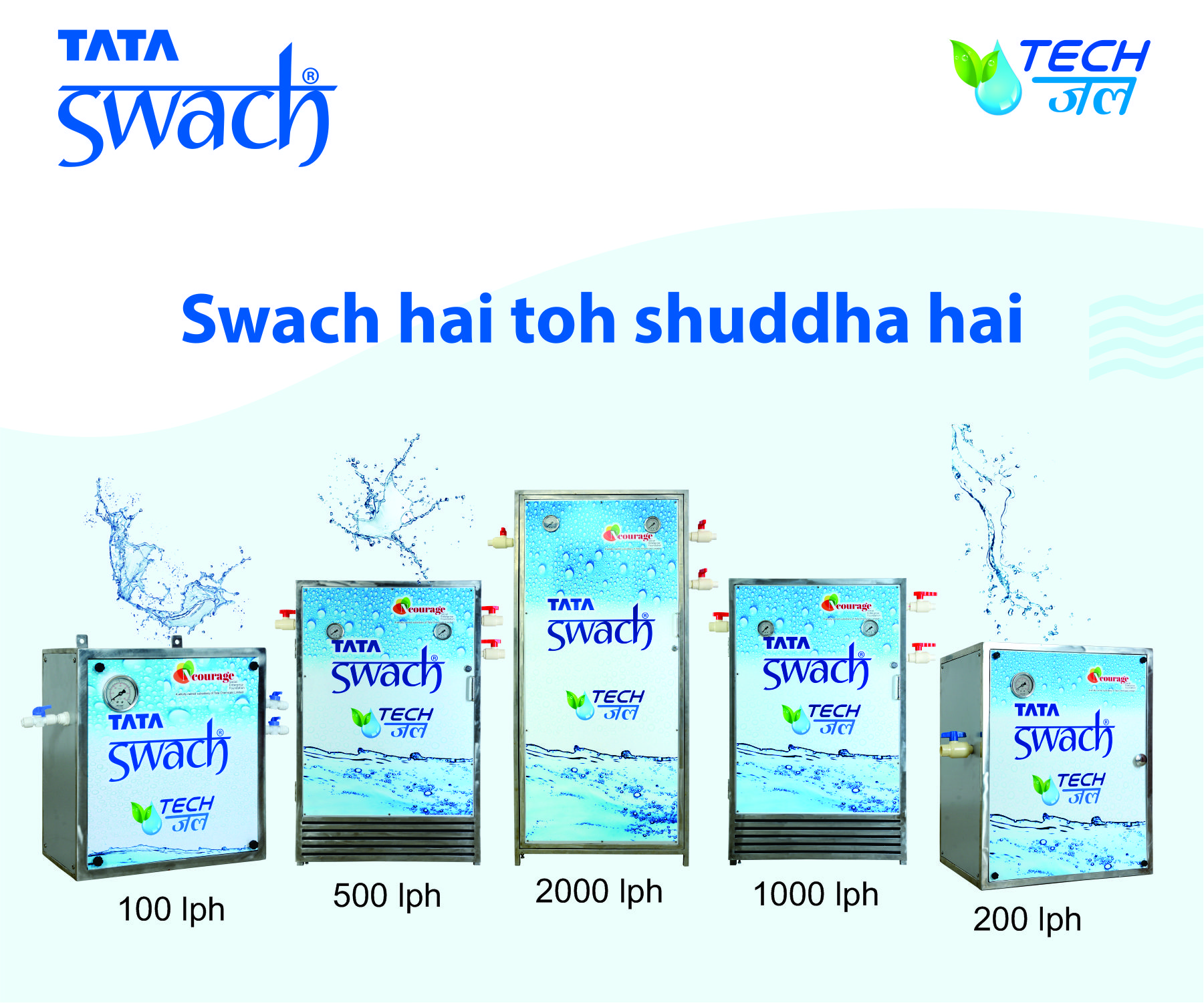
Under this Swach Tarang initiative, so far ~104 small & medium sized clusters of community purification systems have been installed across India with different water purification capacities like 100, 200, 500, 1000 and 2000 litres per hour giving access to safe drinking water to 37000+ people in more than 10 states.
Grassroots organisations also came up with a number of innovative models to increase reach, two of which are mentioned below
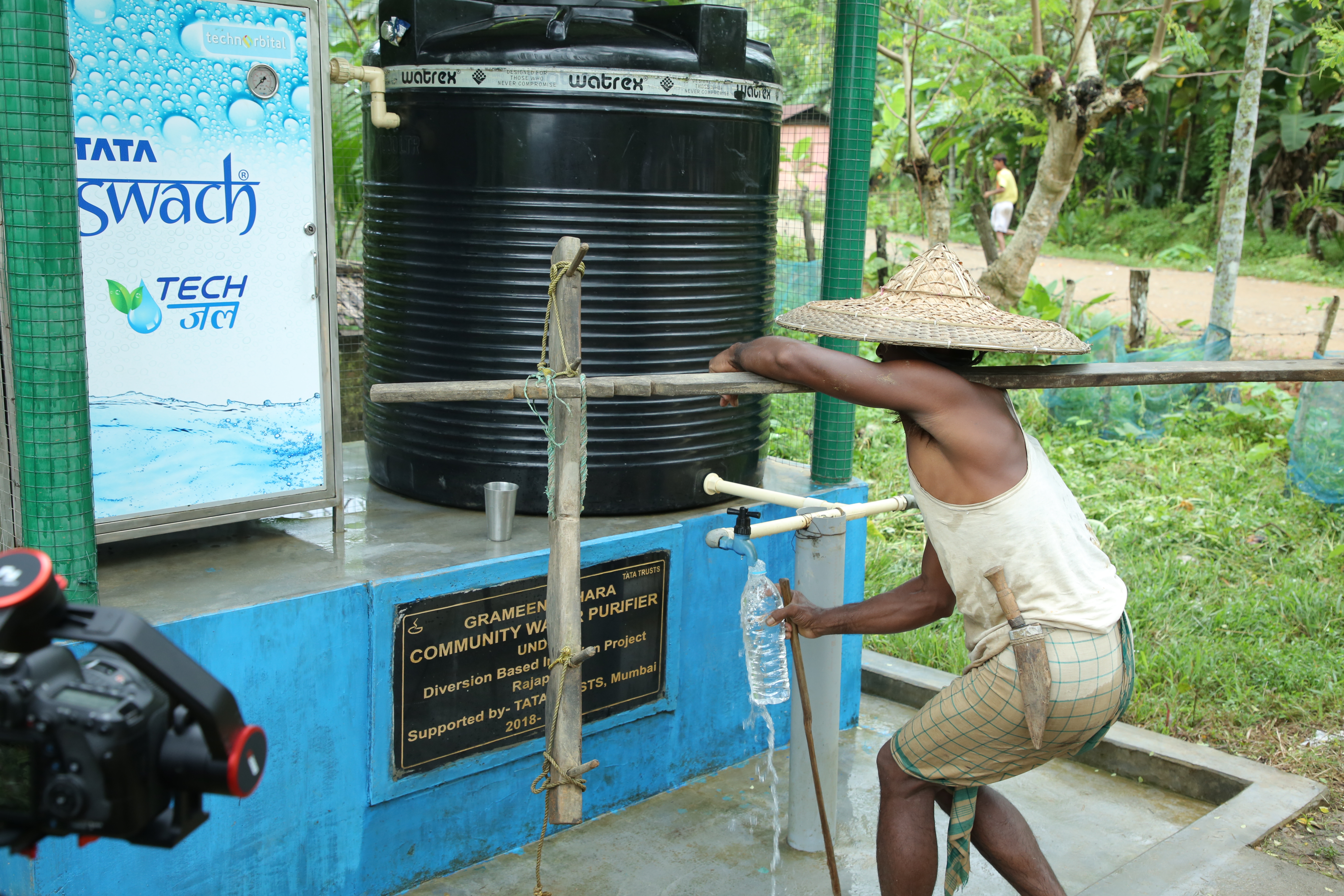
a) Clean water distribution model - Swach Tarang initiative not only addresses a basic need of providing safe and clean water to the base of the socio-economic pyramid but also creates an opportunity for employment. Our first Tata Swach Tech Jal was installed in 2019 in Gahiri Village of Pratapgarh district, UP. Tata Swach Tech Jal with a purification capacity of 500 litres per hour was assembled and put in place to cater to their safe drinking water requirements. This was a life changing moment for them and also for nearby villagers like students & their parents who used to come for schooling here. Seeing this village panchayat appointed an unemployed needy person and gave a task of distributing purified water from Tata Swach Tech Jal to nearby villages at Rs.5 per 20 Litres jerry can. About 78 households are being catered with Tech Jal purified water, as of now. This has led to employment and also created awareness amongst villagers the importance of clean drinking water. This clean water distribution model will be replicated by nearby villages like Gondai & Jondhpur where Tata Swach TechJal has been recently installed.
b) Swach tarang ATM interface – An ATM has been installed at Neil Islands (Andaman) where besides creating livelihood opportunities for local community persons; it also provides assured clean and safe drinking water to tourists and thereby helping reduce usage of single use plastic bottles.
What did you achieve as outcomes? What impact project has created on the ground?
Direct Beneficiary (groups) Number of Direct Beneficiary Indirect Beneficiary (groups) Number of Indirect Beneficiary Tech Jal have helped community from interior villages of, Andaman and Nicobar, Arunachal Pradesh, Assam, Delhi, Gujarat, Maharashtra, Manipur, Nagaland, Orissa, Telangana, UP 37000 people Few of our installations have generated employment opportunities, also the purified water from these installed units is getting distributed not only to direct beneficiaries but also to surrounding communities.
Schools and Government bodies, SHG’s, NGO’s and nearby village population.Marginalised groups from West Bengal , Gujarat , Maharashtra, MP, UP, Assam, Mizoram, Kerala, J&k, Arunachal Pradesh and Nagaland were given home purifiers 34000 people SHG group of these villages, as the purifiers have helped to reduce water borne diseases among the families working wi SHG’s
Key indicators of project results?
Indicator Particulars % People Benefiting from Tata Swach tech Jal installations in a cluster 100% of the community population, where Tech Jal has been installed have migrated to availing drinking water from these purifier units Number of people to whom this initiative is able to give an access of clean water Counting 71000+ people households reach till date Monitoring & tracking system for 24X7 Operations Monitoring & tracking system was established to ensure that the units are 100% operational. This also indicated effectiveness of the initiative.
Technology Leveraged by this Project
Under this campaign, Ncourage is installing Tata Swach Tech Jal water purifiers as a sustainable & safe & clean drinking water solution for the community. Tech-Jal is a drinking water technology developed by Technorbital that uses polymeric hollow fibre membrane. The unit operates with three stages of purification process – Sediment Filter Cartridge, Activated Carbon Cartridge (Silver impregnated) and Ultrafiltration Cartridge. It not only removes dust, dirt and turbidity but also, removes viruses (like Hepatitis A & E, Polio virus) (4 log reduction) along with bacteria (like E-coli) from the raw water (6 log reduction) and parasitic protozoan cysts (4 log reduction) in accordance with USEPA / NSF guidelines. These community purifiers are suitable for raw water having TDS up to 1500 ppm and are available in varying purification capacities from 100 litres per hour to 500, 1000 & 2000 LPH catering to a population of 50 to 1200 people respectively with applications in larger communities / schools / colleges/ offices/ hamlets etc. Thus offering a cost effective unit that’s easy to operate and maintain, at the same time affordable time saving solution that does not need electricity to run or lead to water wastage unlike other conventional purifiers.
Swach Tarang initiative also offers another community purifier variant in form of Water ATMs, which helps in sustainability and scalability of the project.
Did project leverage any government scheme(s)?
NO the program has not leveraged any govt. scheme, however, has collaborated with Govt. through partner organizations.Swach Tarang initiative also offers another community purifier variant in form of Water ATMs, which helps in sustainability and scalability of the project.
Sustainability and Scalability of the project.
Sustainability: Through this initiative of provision of clean drinking water Swach Tarang is trying to make a significant contribution not only by tackling water-borne diseases but also in creation of livelihood opportunities. Tech Jal water dispensing is also amenable to be used for creating entrepreneurship opportunity and thereby working out a cost - price model to make it self sustaining The funds collected could payout for the unit and the negligible maintenance. The partners also collect funds for the replacement of the filter cartridges from the community so that it can be replaced as required for 24x7 availability of clean water. The Filter works smoothly for a period of 1.5 years.
Swach Tarang also ensures care of the environment as well. It ensures zero water wastage, unlike conventional RO systems that are haphazardly being used & wastes ~70% of input water. It is a gravity based solution not requiring any electricity. In case where sufficient pressure gradient is not available, the system can also customized to use a pumping arrangement that is solar energy operated.
Scalability: This initiative can be easily scaled through capacity / no. of units that can be deployed for addressing community safe drinking water requirements from 50 to 2000 households, The two primary models viz: philanthropic deployment and entrepreneur venture, that have been deployed can easily be replicated in any part of the country. The deployment and successful working in remote areas of Assam, Manipur and Odisha also suggests it could be practically put to use in any geography.
Fact that 104 small to medium sized clusters are being served with clean drinking water is also the proof of concept. The model is now available for scaling and we are looking for partners wishing to adopt villages. Different models can be made available at subsidized rates to NGOs/ SHGs.
Previous Next